The
objective of this workshop is to enhance participants’ practical understanding
of how human performance influences major accident risks. The workshop equips
participants with practical tools to conduct basic Safety-Critical Task
Analysis and apply human factors thinking during incident investigations in
high-hazard environments.
The
workshop introduces practical human factors methodologies relevant to
industrial operations. Participants will learn how to identify safety-critical
tasks, understand common human failure types, and recognise performance
influencing factors through simplified real-world examples. The session
emphasises prevention and learning from incidents, while briefly highlighting
alignment with Singapore Safety Case expectations.
Teng Chong Seng
Senior Professional Officer, Singapore Institute of
Technology
President, Society of Loss Prevention
Teng Chong Seng brings over 40 years of industry experience spanning enterprise resilience, environmental sustainability, workplace safety and health, process safety, and business continuity across the Asia-Pacific region. He has successfully led large-scale greenfield projects in semiconductor wafer fabrication and pharmaceutical manufacturing.
He is actively involved in professional organizations and currently serves as President of the Society of Loss Prevention for Process Industries. He holds a Master of Science in Environmental Management from the National University of Singapore, along with bachelor’s degrees in environmental technology (Deakin University) and Business Administration (RMIT University).
Senthilvelan Karthikganesh
Lead Process Safety, Asahi Kasei
Senthilvelan Karthikganesh has over 20 years of
experience in process safety, process design, process engineering, and plant
operations across the chemical and petrochemical industries in Asia. He has
served in key roles including Safety Case Lead, Process Risk Analysis
(PHA/LOPA) Leader, Human Factors Specialist, and Consequence Modelling
Practitioner.
He currently serves as Lead Process Safety at Asahi Kasei Singapore, supporting regulatory Safety Case development, Process Hazard Analysis (PHA), ALARP demonstrations, Management of Change (MOC/PSSR), alarm management, and incident investigations. He is concurrently pursuing a Doctor of Engineering (Process Safety) at the Singapore Institute of Technology (SIT), with research focused on Safe Operating Limits in Major Hazard Installations.
He holds a Master of Science in Safety, Health & Environment (Process Safety specialization) and a Bachelor of Technology in Chemical Engineering from the National University of Singapore (NUS).
Juan Badathuruge
Sadun Lakruwan
Process Safety Specialist, MSD Singapore
Juan Sadun Lakruwan has over 11 years of professional experience in safety and process safety management. He currently serves as a Process Safety Specialist at MSD Singapore, supporting Safety Case development, Process Hazard Analysis (PHA), ALARP demonstrations, Management of Change, training, incident investigations, and safety audits.
He holds a Master of Science in Safety, Health & Environment (Process Safety specialization) from the National University of Singapore and a Bachelor of Engineering (Honours) in Chemical Engineering from Nanyang Technological University.
- Operations and Maintenance Supervisors
- Process Safety and HSE Practitioners
- Safety Case Coordinators
- Engineers and Technical Managers
- Professionals involved in incident investigations
or operational risk management
- Awarded 4 SDU points by MOM-WSH CPD Board
- E-Certificate of Attendance will be issued to all attendees upon completion.
10 April 2026
|
Time
|
Programme |
|
1230-13:00 |
Registration & Welcome Coffee |
|
1300-1310 |
Welcome
Remarks |
|
1310-1400 |
Session 1: Safety-Critical Task Analysis (Overview & Practical Example) |
|
1400-1430 |
Group Exercise: SCTA Case Study |
|
1430-1445 |
Tea Break |
|
1445-1515 |
Session 2: Human Factors in Incident
Investigations (Simplified Framework & Example) |
|
1515-1600 |
Group Exercise: Incident Case Study |
|
1600-1620 |
Key Takeaways & Practical Application in Industry |
|
1620-1700 |
Q & A and Closing Remarks |
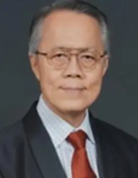
- Speaker
President,
Society of Loss Prevention
Having 40 years of extensive industry experience. Chong Seng has a distinguished career in leading enterprise resilience, environmental sustainability, workplace safety and health, process safety functions, and business continuity readiness across the Asia Pacific Region. He has successfully been involved in the startups of multimillion-dollar greenfield projects in semiconductor wafer fabrication and pharmaceutical manufacturing.
Currently assuming a role of Senior Professional Officer with Singapore Institute of Technology (SIT) and his experience spans both the applied research and applied learning.
Graduated in Master of Science in Environmental Management from National University of Singapore, BTech from University of Deakin University, Australia and BBA from Royal Melbourne Institute of Technology, Australia.
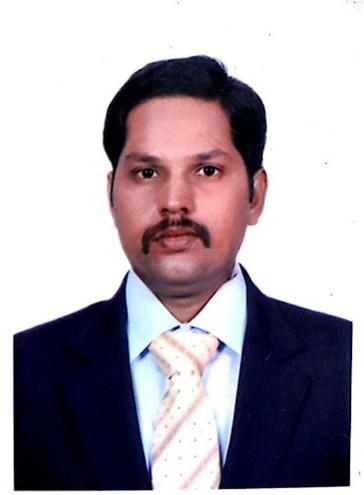
- Speaker
Lead Process Safety, Asahi Kasei Singapore
Having more than 20 years of experience in process safety,
process design, process engineering, and plant operations, with extensive
exposure across the chemical and petrochemical industries in Asia. Recognised
as a strong team player with professional accomplishments including roles as
Safety Case Lead, Process Risk Analysis (PHA/LOPA) Leader, Human Factors
Specialist, Consequence Modelling Practitioner, and Lean Six Sigma Green Belt
holder.
Currently serving as Lead Process Safety at Asahi Kasei,
Singapore, where he supports regulatory Safety Case development, Process Hazard
Analysis (PHA), ALARP demonstrations, Human Factors Study, MOC/PSSR, alarm
management, and incident investigations. He is concurrently pursuing a Doctor
of Engineering (Process Safety) at the Singapore Institute of Technology (SIT),
with a research focus on determining and managing Safe Operating Limits in
Major Hazard Installations.
He holds a Master of Science in Safety, Health &
Environment (Process Safety specialisation) and a Bachelor of Technology in
Chemical Engineering, both from the National University of Singapore (NUS).
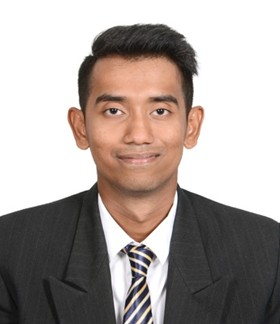
- Speaker
Process Safety Specialist, MSD Singapore
Juan Badathuruge Sadun Lakruwan has over 11
years of professional experience in the field of safety and is currently
serving as a Process Safety Specialist at MSD Singapore. He has a strong
interest in process safety and is a driven, process-oriented professional who
continuously seeks to learn, embraces new ideas, and strives for ongoing
personal and professional improvement. He is also a collaborative team player
who builds positive working relationships and contributes effectively within
teams.
In this capacity, he supports the site in Safety Case
development, Process Hazard Analysis (PHA), ALARP demonstrations, Management of
Change, training, incident investigations, and safety audits.
He holds a Master of Science in Safety, Health &
Environment (Process Safety specialisation) from the National University of
Singapore and a Bachelor of Engineering (Honours) in Chemical Engineering from
Nanyang Technological University.
Member: $0
Write a public review